

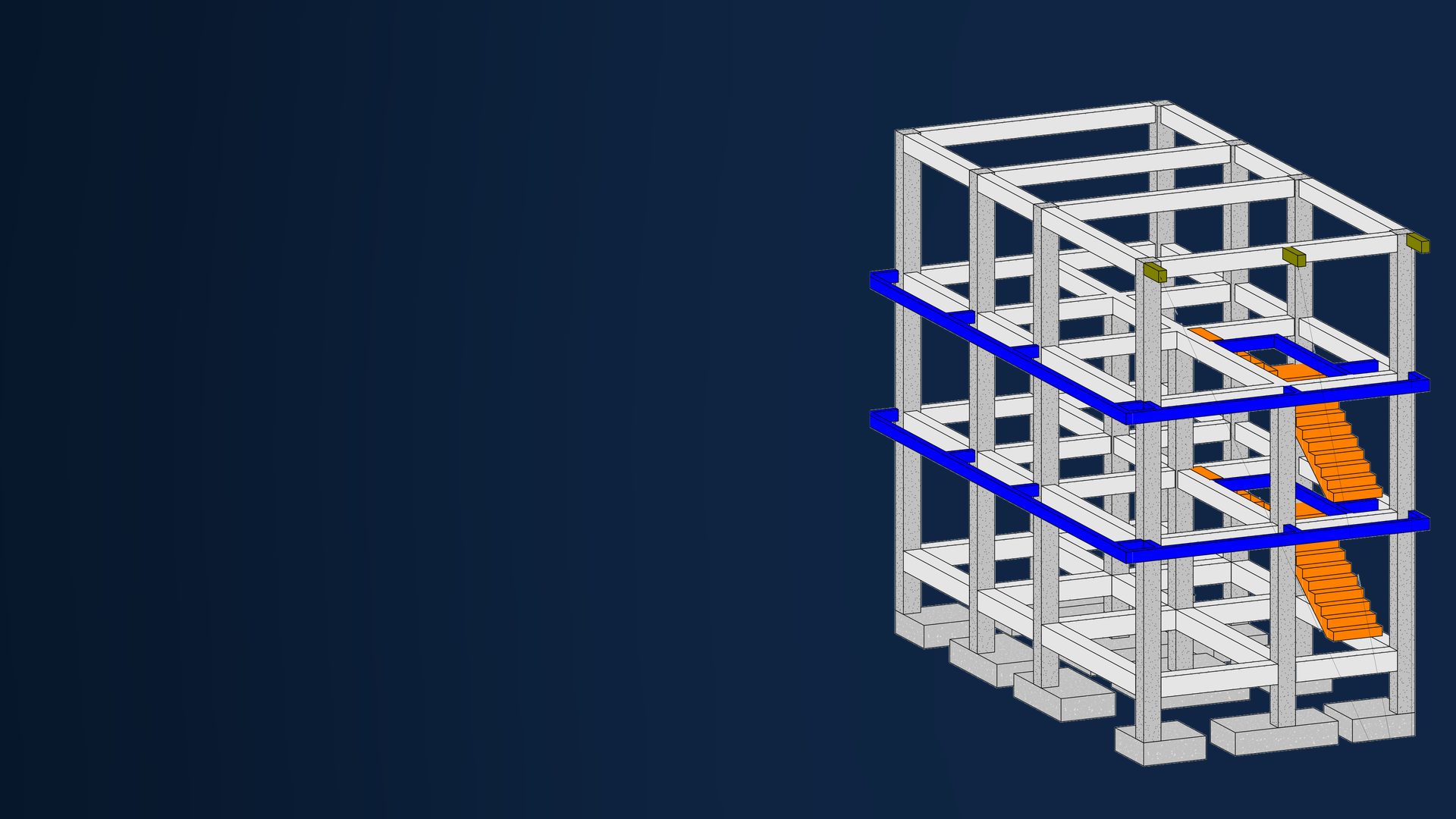

There are walls that no longer hold what everyone assumes they hold. They give no warning. They don't crack the next day. They wait for the worst possible day — and that is the day you find out what was done to them.
We were called to a house for a reason we hear more and more often: fear. A mother and her son had seen, like everyone else, footage of earthquakes tearing ordinary homes in half in other countries — and they looked at their own house differently. They told us the columns looked small to them, that one wall "moved", that the lower floor already had its decades behind it. They didn't want to be talked down from it. They wanted the truth, and they wanted the house safer.
What we found wasn't a defect in the original build. It was the sum of a series of decisions. Over time the structure had been altered by hands with no technical training: people working on site, and nobody holding a calculation that said what each cut was doing to the whole. The most glaring example was in plain sight: to install the consumer unit and run the cabling, deep chases had been cut into a masonry wall — channels gouged from top to bottom. At no point had anyone asked the only question that matters: is that wall holding the house up?
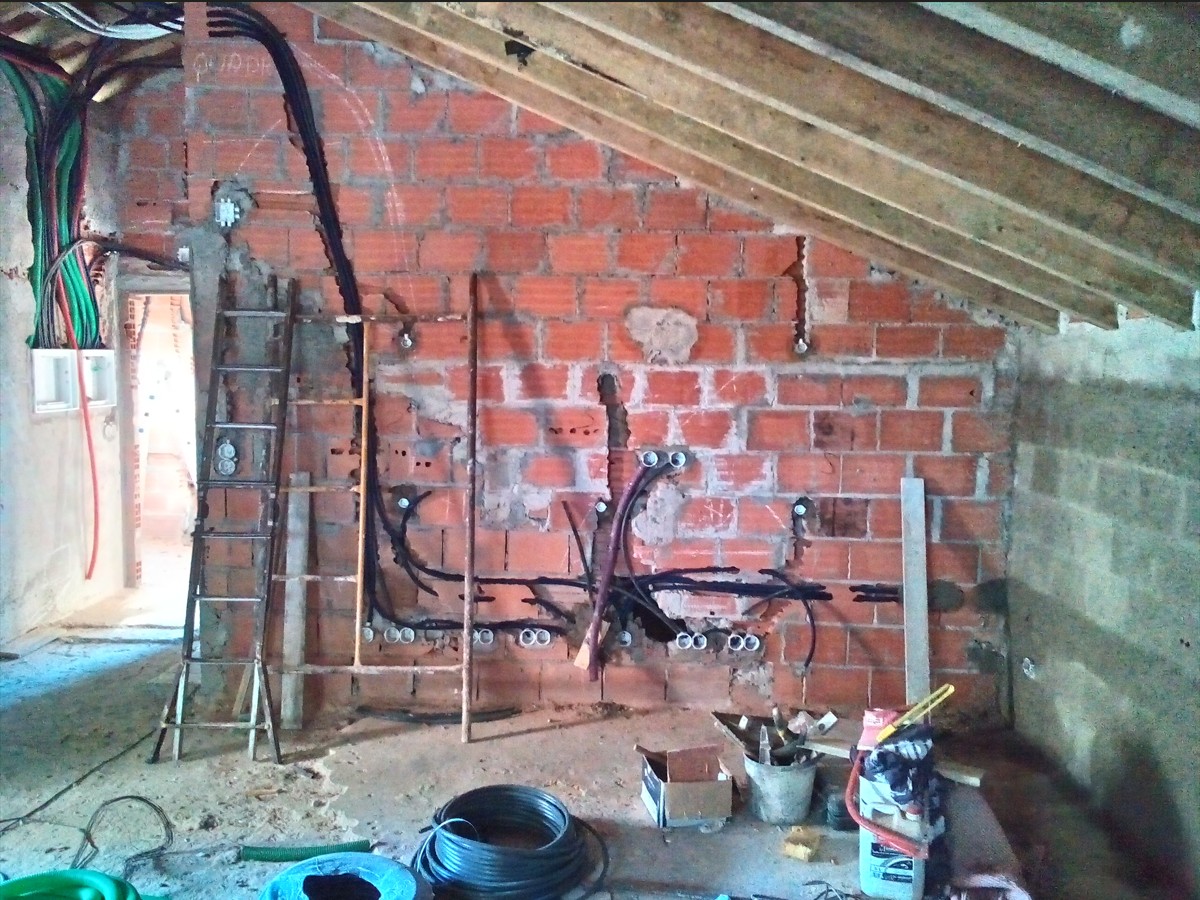
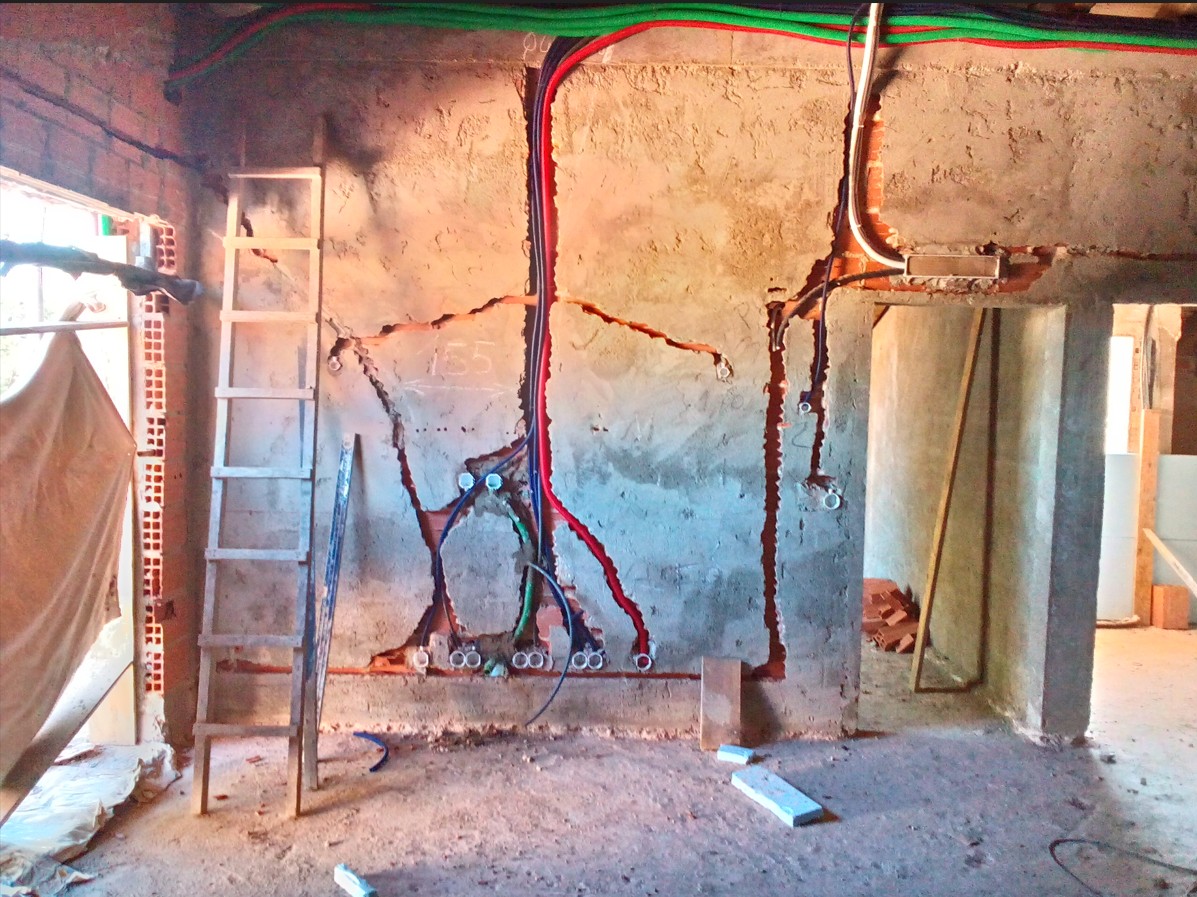
This house is not a rare case. It is the portrait of thousands of homes across Portugal where, at some point, the technical side was handed to someone who could not carry it — and where nobody qualified ever went back to check what had been left behind. The age of the house is the least important part of this story. What matters is the hand that went into the structure.
If you bought here, you inherited someone else's decisions
This is where it gets uncomfortable for anyone who has bought a property in Portugal from abroad. You didn't commission any of that work. You never met the people who did it. But the moment you signed, every undocumented alteration in that building became yours — along with whatever it did to the structure.
And here is the part almost nobody spells out: the survey or valuation carried out for your Portuguese mortgage was not a structural assessment. It looks at value and visible condition. It does not establish which walls are load-bearing. It does not check whether a previous owner removed half a wall, added a storey, or cut the structure open to run pipes and cables. Those are different questions entirely, and they need an engineer — not a valuer.
There's a geographic sting to this, too. The Algarve is simultaneously where a large share of foreign buyers concentrate and one of the two highest seismic risk zones on the Portuguese mainland under Eurocode 8. Plenty of people have bought a charming older property in exactly the area where the structure matters most, and have never had anyone technical look at it.
Why this is on everyone's mind again
In June 2026, a magnitude 7.5 earthquake in Venezuela — preceded 39 seconds earlier by another at 7.2 — killed thousands of people and brought down thousands of buildings in minutes. The world watched, live, what a strong earthquake does to buildings that were never designed, or are no longer fit, to take it. You don't have to look that far for this to concern you. Portugal has its own seismic history — and it is closer than most people care to admit.
Portugal has felt this before — and answered it first
On 1 November 1755, an earthquake with an estimated magnitude between 8.5 and 9 destroyed almost all of Lisbon, followed by fires and a tsunami. It was one of the most powerful earthquakes in recorded European history, and it killed tens of thousands. It is also, for reasons that matter directly to anyone reading this, a landmark in engineering: after the disaster, Lisbon was rebuilt using the gaiola pombalina — a timber cage interlaced within the masonry walls, recognised as the world's first anti-seismic construction system. Portugal did not discover seismic risk recently. It was, more than 270 years ago, the first country to build deliberately against it.
Seismic risk on the Portuguese mainland concentrates in two areas under Eurocode 8 (the European standard in force): the Algarve — close to active faults such as Portimão, Quarteira and Faro-Loulé, and the site of the 1722 earthquake — and the Tagus Valley, including the Lisbon region. This isn't a remote hypothesis; it's the reason technical legislation on how buildings must be built and reinforced in these areas is still being updated today.
Age misleads. What counts is the code it was designed to — and whether that was respected
The age of a house, on its own, tells you less than you think. What tells you more is the legislation it was calculated under — and whether that calculation was subsequently respected:
| Period of construction | What the law required | What that means today |
|---|---|---|
| Before 1958 | No legal requirement for seismic calculation | The structure may never have been designed for an earthquake |
| 1958 – 1983 | RSCCS / RSEP — first generation of seismic rules | Basic seismic calculation, well below today's standards |
| 1983 – 2020 | RSA — more demanding national code | Considerably higher safety level, still below the current one |
| 2020 onwards | Eurocode 8 — European standard in force | The most demanding standard ever applied in Portugal |
Note this: a house from 1985 was already born, in theory, with serious seismic calculation behind it. Which is exactly why the story at the top of this article is more revealing than it looks — the problem is rarely the original design. It's what happened after it.
The real risk isn't the age. It's the hand that went into the structure
Every house has two kinds of wall: load-bearing walls, which form part of the system holding the building up, and partition walls, which merely divide space. The problem is brutally simple: by eye, they often can't be told apart. And this is where almost every "improvement" done without an engineer goes wrong.
An opening is cut into a load-bearing wall in the belief it's a partition. A deep chase is gouged top to bottom to run electrics or the consumer unit — cutting away half the section that made the wall work. A wall is rebuilt in a weaker material than the one that was there. A storey is added on top of a structure that was never calculated to carry it. Any one of these decisions, taken alone and without calculation, may give no sign at all in day-to-day life — right up until the day the house has to resist a horizontal force, like an earthquake. And then there is no second attempt.
One thing to be clear about: the villain isn't the material. Hollow clay brick is normal, safe, and makes up the overwhelming majority of Portuguese walls — in the role it was designed for. The villain is using it where a structural wall belongs, or mutilating a wall that was carrying weight without knowing that it was. And it's a silent villain: you can't see it, it doesn't bother you, it doesn't crack straight away. It only presents the bill at the worst possible moment.
Your builder cannot sign for this — and that matters more than you think
If you're managing a renovation in Portugal from abroad, this is the single most valuable thing in this article. Structural work here requires a termo de responsabilidade (termo de responsabilidade), and it can only be signed by an engineer registered with the Ordem dos Engenheiros, holding a valid competence code and professional civil liability insurance. A builder cannot sign it. No matter how experienced, how well recommended, or how confident they sound.
And since the SIMPLEX Urbanístico reform, that signature is the only safety net left: the local council no longer reviews the structural calculation. So when work is carried out by people with no technical oversight, there is no calculation, no design and — above all — nobody with a name and a registration number who is accountable for it. Work done that way wasn't cheaper. It was simply work with nobody standing behind it.
The right question isn't "how old is my house?". It's this: "has an engineer ever looked at what was done inside it?" In most houses over 20 or 30 years old, the honest answer is no — and it's that uncertainty, not the age, that a survey resolves.
Even Lisbon City Council is acting on this
We're not the only ones taking this seriously. In 2021, Lisbon City Council created the ReSist programme, dedicated to the city's seismic resilience. It has already assessed the seismic vulnerability of 1,593 buildings in municipal housing, and is preparing a technical support programme for the seismic reinforcement of privately owned buildings. When the municipality itself is mapping the risk and spending money on it, it's hard to see why a private owner would carry on deciding blind about their own home.
Run the first filter yourself
This isn't a diagnosis — it's the first filter, the same one we start with when we walk into a house. No single one of these signs condemns yours. But the number changes the urgency. Tick them honestly and see where you stand.
We don't sell fear. We sell the difference between knowing and guessing
This isn't about living in dread of the next earthquake. It's about no longer making decisions on the house you sleep in without knowing what's behind the walls. A survey is exactly that: an engineer registered with the Ordem dos Engenheiros comes to the property, physically identifies what is structural and what isn't, records cracks and alterations, and hands you a documented technical report — not a quote dressed up as a diagnosis. If everything is fine, you have that in writing. If something needs correcting, you get a prioritised plan and a fixed price so you can decide calmly. Either way, you stop guessing. Reports are issued in English.
What it costs to know the truth about your home
Less than most people assume — and vastly less than rushing to correct something that was ignored for years:
| Service | Price | What's included |
|---|---|---|
| Structural survey and technical report | From €400 | Site visit, identification of load-bearing walls, documented report in English |
| Structural reinforcement (steel) | From €400/m² | Reinforcement of the area identified as vulnerable |
| Structural reinforcement (carbon fibre) | From €300/m² | Lighter alternative, depending on the case |
The survey isn't the end of the story — it's the start of an informed decision. Fixed price, no surprises, from €400. That's the cost of trading a suspicion that won't leave you alone for a technical answer you can keep in writing.